Dear Graham,
Before I go any further, I realize I’ve skipped over something important. I want to back up to January 2026 and tell you about our trip to Panama City to begin the temporary residency process. It’ll take several letters, and then we’ll pick up where we left off.
We land at the Panama airport early on the morning of January 3. The air is thick with humidity, and already my hair is curling. Our driver is Joseph, the name of Jesus’ earthly father and also the name of the little statue I buried in our Buddha garden to help sell our home of thirty-two years in Nederland, Colorado. The money from that house will help pay for our retirement in Panama.
Joseph’s skin is dark brown, and his eyes are the color of copper coins. Tall and thin, he wears blue jeans and a dark blue cardigan. He holds a white cardboard sign with “Nancy and Tom Kirkendall” written in black Magic Marker. Tom and I greet him as he takes our bags and leads us out of the airport into the dark, midnight-blue Panamanian sky. Above us, a huge full moon shines like a giant pearl.
I ask where he is from, and he simply answers, “Panama,” as I slip into the front seat beside him. Tom settles into the back. Joseph’s voice is gentle and kind, and his English is excellent.
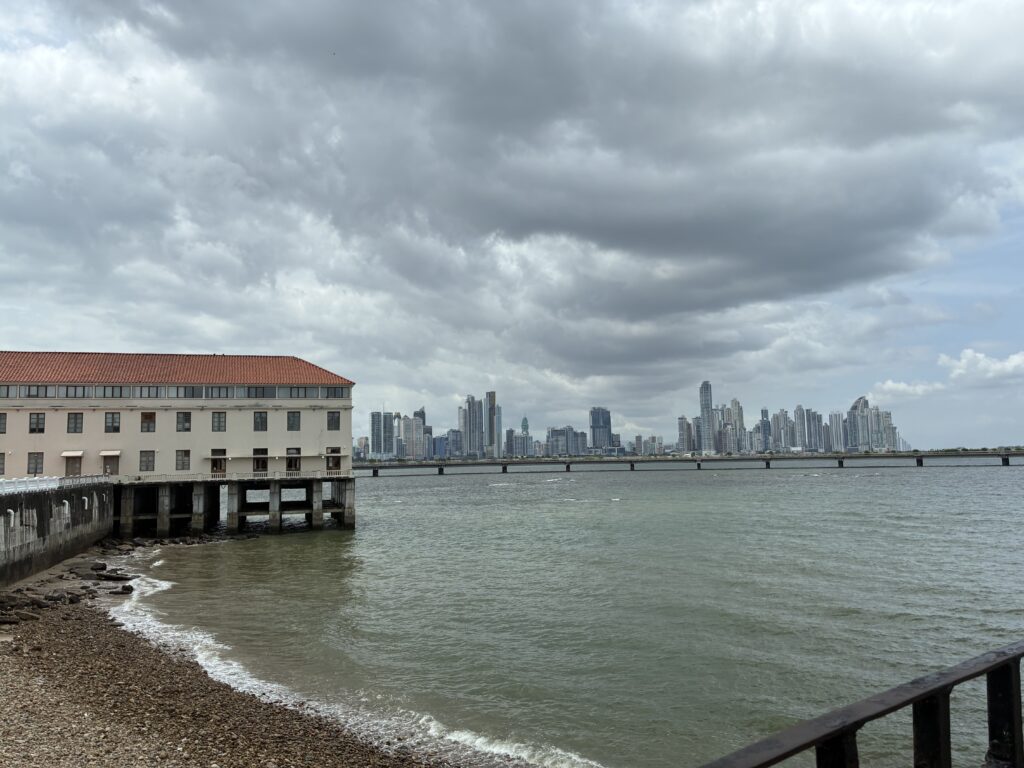
It is 5:30 in the morning. The sky is a milky indigo as we drive through the nearly empty streets of Panama City. Joseph points to the skyline, an unusual futuristic cityscape where I half expect to see flying machines zipping between the buildings. We reach Balboa Avenue and drive alongside the Pacific Ocean.
Joseph turns into Casco Viejo, the Old Town district of Panama City, where we have rented an Airbnb for ten days. During that time, we will begin the process of obtaining our temporary residency and Panamanian driver’s licenses—the first official steps in our immigration journey.
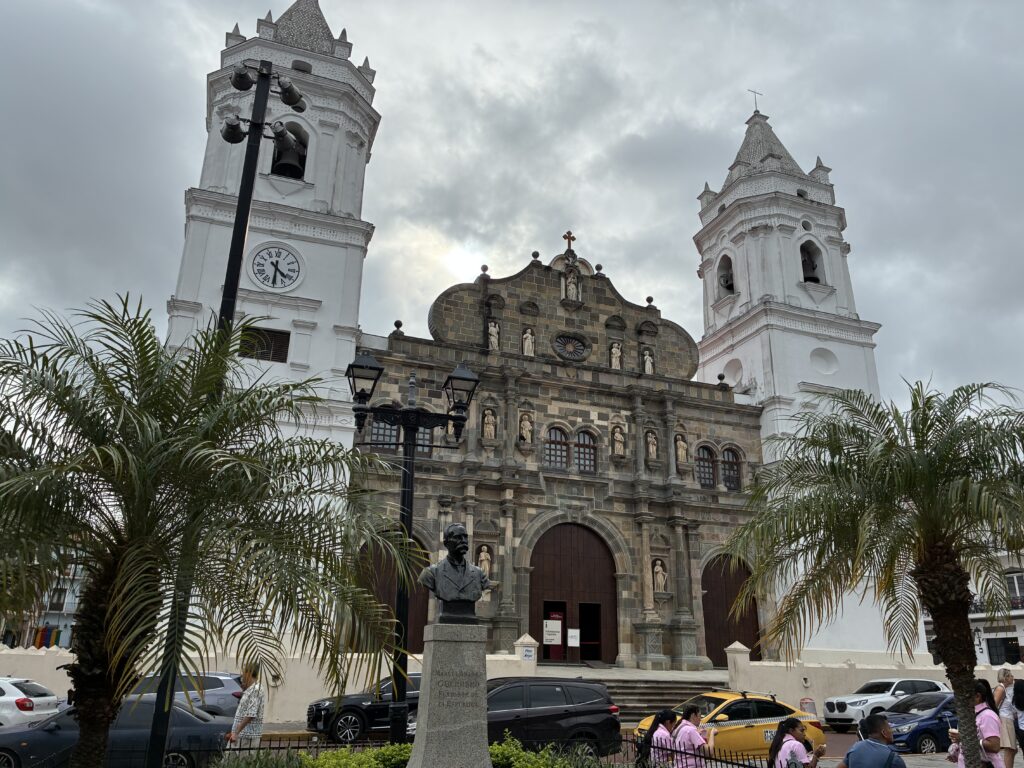
To my left I see a long, wide promenade stretching along the sea, then a large plaza with a tall brick cathedral crowned by two white towers. Across the street stands a four-story light gray hotel with rounded arched windows opening onto black wrought-iron balconies. The streets are still quiet.
The buildings in Casco Viejo are a blend of Spanish Colonial and French architecture, painted in soft pinks, blues, yellows, whites, and grays. The streets are narrow and paved with brick. To me, it feels a little like New Orleans.
Tom and I are exhausted. We departed Denver at 9:15 the previous evening and have been traveling through the night. Just as we arrive, we receive a text from Isabelle, our Airbnb manager, saying our apartment will not be ready until 3:00 p.m. She can store our luggage, but the previous guests checked out that morning, and the apartment still needs to be cleaned.
Joseph senses my disappointment. He takes us to an American-style coffee shop where we can have breakfast and rest for a while. We thank him and arrange for him to pick us up early the next morning for our appointment at the U.S. Embassy.
Tom and I order iced coffee lattes and smoked salmon breakfast sandwiches. The food is nourishing, and before long we begin to feel human again. I rest my head on the table and close my eyes for a few minutes. Then we step back out into the streets of Casco Viejo to begin a day-long walk through the tropical heat of Panama.
We duck into the Cathedral Basilica of Santa María la Antigua. The air is cool, and the interior is peaceful. Soaring white arches rise overhead. The polished black-and-white marble floors reflect the light, and the beautiful main altar is decorated in soft blues and creams with intricate gold carvings.
Tom and I walk to the front, bow, and sit quietly in one of the wooden pews. I close my eyes and sink into the silence. After a while, I open them, walk around the inner circumference of the cathedral, and then join Tom as we step back out into the sunshine.
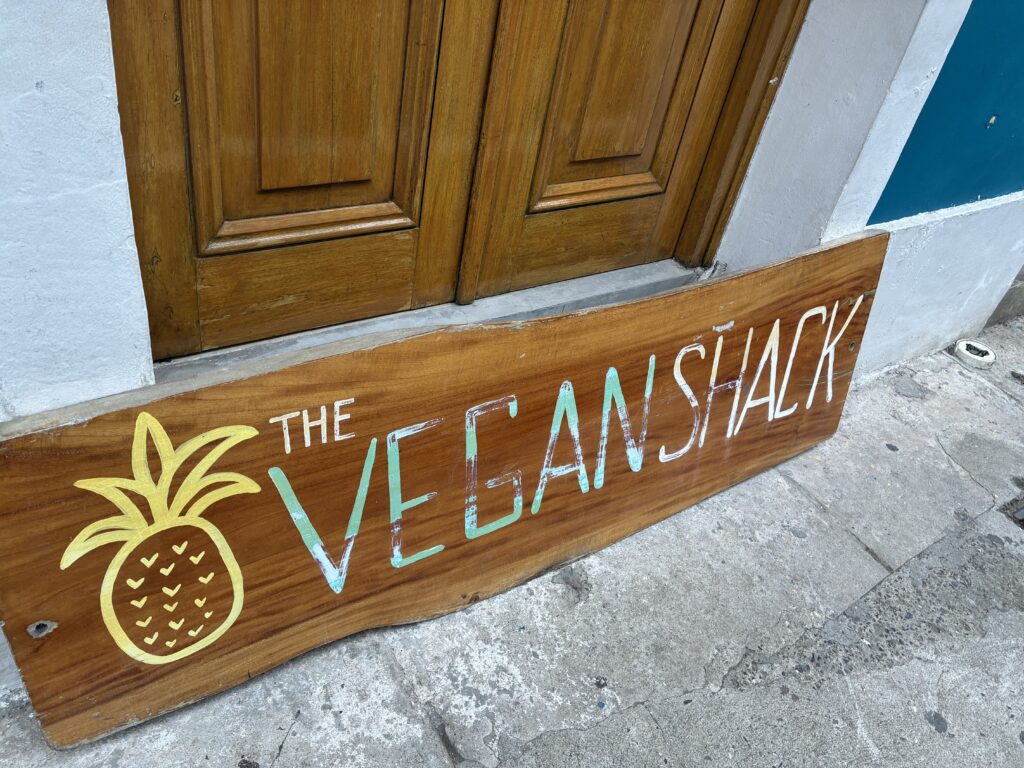
An acquaintance had recommended a place for lunch called Mia’s Vegan Shack. She told me, “Even if you’re not vegan, you’ll love it.” I entered it into Google Maps, but every time we followed the directions, we lost the satellite connection. Finally, I stopped in a nearby store and asked the two women working there if they knew where Mia’s Vegan Shack was. They smiled, pointed down the street, and motioned for us to turn left.
We followed their directions and, much to our surprise, discovered that Mia’s Vegan Shack was on the same street as our Airbnb—a small coincidence that would make our ten days in Casco Viejo both magical and wonderfully convenient.
The Vegan Shack turned out to be a real treasure. The interior was exceptionally inviting, with stone walls filled with plants, a large comfortable green sofa, and rustic wooden tables. The food was fresh, nourishing, and absolutely delicious. Mia, the owner, was delightful, and her café became our favorite place for breakfast and lunch throughout our stay.
With the help of several beautiful churches and Mia’s soft green sofa, we made it through our first day in Casco Viejo. Around 2:00 that afternoon, we finally settled into our comfortable Airbnb.
The next morning, Joseph arrived promptly at 7:30 to drive us to the U.S. Embassy, where we would begin another step in the long process of becoming Panamanian residents.
Because the United States helped build the Panama Canal, there is a section of Panama City that feels surprisingly American, with wide boulevards, tree-filled green spaces, and buildings that resemble old U.S. military barracks and government offices. It reminds me of the Presidio in San Francisco, and, unexpectedly, I feel at home there.
The U.S. Embassy sits among acres of green lawns and tall deciduous trees. Tom and I sit beneath one of them and wait for Ariel to meet us and escort us inside. One of the documents required for our residency application must be notarized at the embassy before it can be submitted to the Panamanian government.
Ariel is a short, stocky Jewish man with bright, friendly eyes. He wears a yarmulke and bright blue Crocs, a reminder of Boulder, Colorado, where the shoes were first developed and where Tom and I had lived for so many years. I like him immediately.
He leads us through security, where our bags are inspected and our pockets emptied, much like going through an airport. From there we walk into a large office building filled with fluorescent lights, rows of chairs, and government employees seated behind glass windows. We take our seats and wait for our names to be called. After answering a few questions, signing several forms, and having our documents notarized, we complete another important step toward becoming legal residents of Panama.
As the morning sun brightens over the Pacific, I realize we have crossed far more than a border. We have crossed a threshold into the next chapter of our lives, leaving behind the home and identity we had known for more than three decades and stepping into a future that is unfamiliar, uncertain, and full of possibility.
As I closed the apartment door behind us later that day, I realized we’d crossed an invisible line. Panama had already begun welcoming us—with Joseph’s kindness, the quiet embrace of the cathedral, the helpful strangers who pointed us toward Mia’s little café, and the steady progress of our first official paperwork. I had no idea then that this was only the beginning.
With Love,
CC