Dear Graham,
Bliss and Blisters
There’s a newer restaurant in North Boulder Colorado that Tom and I both love. It’s called Scratch, and they make the most delicious poké bowl. Every time I eat there, I feel deeply nourished and grounded. We each had that poké bowl—our “last supper”—before our second attempt at flying to Panama.
On April 8, we moved more intelligently and with far more focus than we had the day before. We took care of business, enjoyed our poké bowls, and drove from Boulder to the Hampton Inn, where we once again loaded our ten suitcases into a rental car—this time, a larger one. The plan was simple: unload everything at the airport shuttle stop while Tom returned the rental car.
When Tom returned the car, he discovered that the “very important” inspection sheet documenting every dent and scratch had disappeared. Unknown to him, I had cleaned out a handful of candy wrappers and, without realizing it, thrown away the inspection form along with the trash.
Tom explained to the rental attendant that we hadn’t damaged the car and somehow the paperwork had vanished. Thankfully, the attendant was understanding and didn’t charge us for any damage.
Meanwhile, the shuttle driver and I packed the back of the shuttle with our “never again” ten suitcases. Tom arrived just as the last bag was loaded, and we climbed aboard for the ride to the Copa Airlines terminal.
At the terminal, we unloaded all ten bags onto the sidewalk and rented two luggage carts to haul everything to the check-in counter.
Netha—the same woman who had helped us the night before—was there, smiling. She seemed genuinely delighted that this time we weren’t just on time; we were early. She checked all ten bags, handed us our boarding passes, and sent us on our way to Panama.
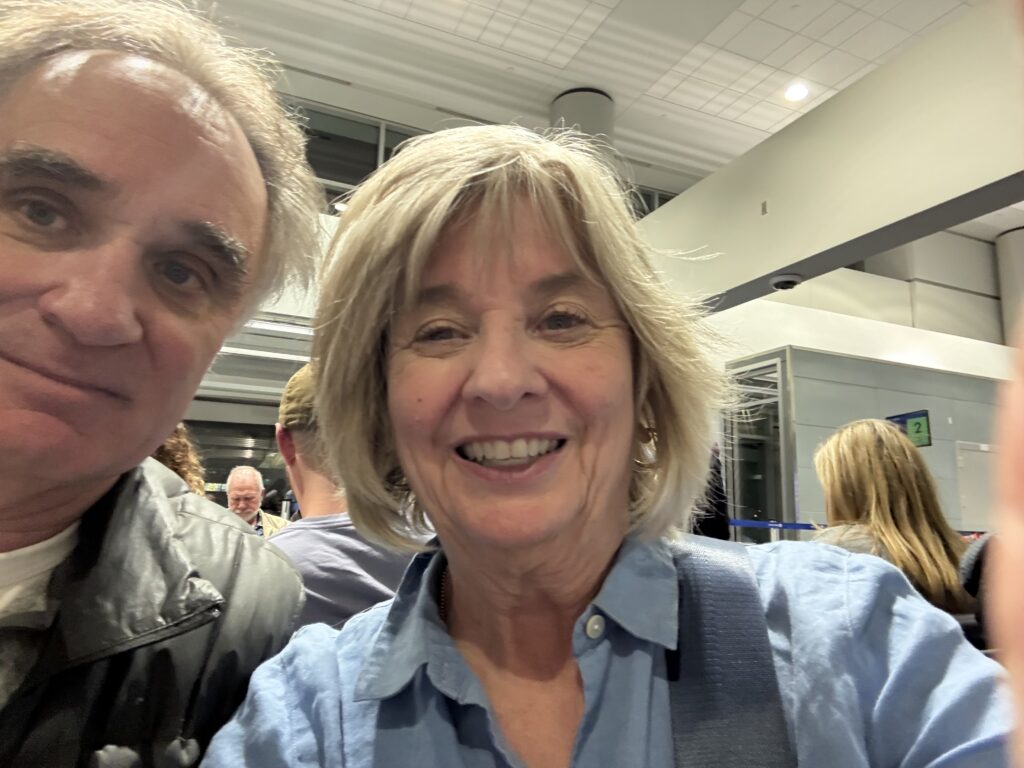
We settled at the gate, charging our phones and waiting to board. Butterflies fluttered in my stomach, so I wandered over to a coffee kiosk and bought two bottles of water and a bag of Fritos.
I never eat Fritos, but standing on the edge of an international move, I wanted something unmistakably American—something familiar that reminded me of my childhood.
Tom and I sat together, happily crunching Fritos and guzzling water.
We boarded around 10:30 that evening. I immediately noticed how warm the cabin felt and overheard someone say the air conditioning wasn’t working. Under normal circumstances, that might have triggered a claustrophobic panic attack, but I was simply too exhausted. I took four sleeping herbs, slipped on my neck brace, pulled my baby-blue silk eye mask over my eyes, and fell asleep.
Both Tom and I slept peacefully through the entire five-and-a-half-hour flight. Neither of us heard—or even smelled—the midnight meal service. We woke only when the pilot announced our descent into Panama.
It was a long walk from the arrival gate through immigration to baggage claim, and the entire time I silently hoped—prayed—that luggage carts would be waiting for us. We had ten bags to collect and somehow get to our driver, Louis.
We already knew Louis from a previous visit and had warned him about our mountain of luggage.
“Don’t worry,” he’d told us. “I’ll bring my van.”
When we reached baggage claim, two handsome Panamanian men stood smiling beside two silver luggage carts.
“Buenos días, amigos,” I said. “Would you help us with our luggage?”
Without hesitation, they loaded every suitcase onto the carts. They were the only two people with carts, and they handled everything. They felt like baggage angels.
Outside, Louis was waiting with a sign that read:
Nancy and Tom
Together we loaded all ten suitcases into his van.
As we drove toward our hotel, Louis asked where we’d be living.
“Pedasí,” we answered.
He smiled and said he was already driving another couple there later that day.
On a whim, I asked, “Would you be willing to take all of our luggage to our house?”
“Of course,” he replied.
For just fifty dollars, Louis drove our belongings five hours across Panama and delivered every suitcase safely to our new home.
It felt like yet another incredible blessing.
By then it was about 9:00 a.m. We had landed at 5:30, reached our hotel around 6:15, and needed to meet Daniel at Banco General to open a bank account.
After a quick hotel breakfast, we grabbed an Uber and headed to the bank.
Opening the account consumed the entire day.
Not one employee spoke English, and every document we signed was written entirely in Spanish. Daniel patiently translated everything and guided us through what felt like an endless process.
That evening we rewarded ourselves with dinner in Casco Viejo at our favorite restaurant, The Vegan Shack. Veggie burgers, home fries, watermelon lemonade, and smoothies never tasted so good.
By 8:00 p.m., we were fast asleep, preparing for our second day in Panama.
The next morning, Tom looked into his wallet and quietly said, “The $3,000 is gone.”
My heart sank.
We had withdrawn that cash to pay our landlord. Strangely, the rest of his money was still there. The only explanation we could imagine was that the stack of bills had somehow slipped out while paying for something.
I was livid.
I had encouraged him to divide the money into smaller amounts and hide it in different places, but he had insisted on keeping it together.
Now it was gone.
Just then Ariel and Jenny arrived to help us set up our phones and begin looking for a car. Emotionally exhausted, we climbed into their vehicle.
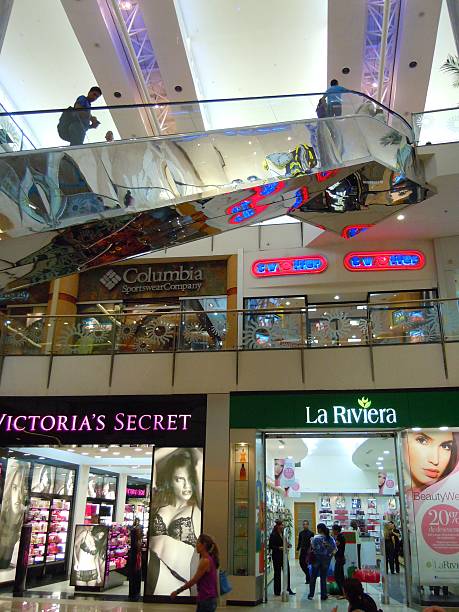
They drove us to the most luxurious shopping mall I had ever seen.
I’m not much of a shopper, and malls usually feel sterile to me, but this one captivated me. Marble floors, sparkling chandeliers, soaring ceilings, and every luxury designer imaginable—Louis Vuitton, Chanel, Dior, Gucci, Prada, Cartier.
Designers I had never imagined walking into stared back at me through enormous glass windows.
For a few moments, I almost felt like I was back in the United States, wandering through Cherry Creek Mall in Denver, surrounded by everything polished, shiny, and familiar.
Ariel and Jenny led us to the Tigo store, where a representative installed eSIMs with Panamanian phone numbers. Having a Panamanian number is almost essential if you want to live and do business there, and now we each had both our American number and a Panamanian one.
After Ariel bought everyone an ice-cold bottle of water, we headed out to look at cars.
Since we’d be living about fifteen minutes outside Pedasí in a beach house, we needed reliable transportation. Ariel had been researching vehicles for us.
At first he thought we’d love the Suzuki Jimny.
I absolutely did.
It felt like the perfect little retirement beach car.
But Ariel thought it was underpowered and too rough for the roads we’d be driving.
Instead, he suggested we look at some of the newer Chinese-made vehicles that were earning excellent reviews while remaining surprisingly affordable.
He took us to a dealership where we met David, a Chinese salesman who was kind, calm, and knowledgeable—more engineer than salesperson.
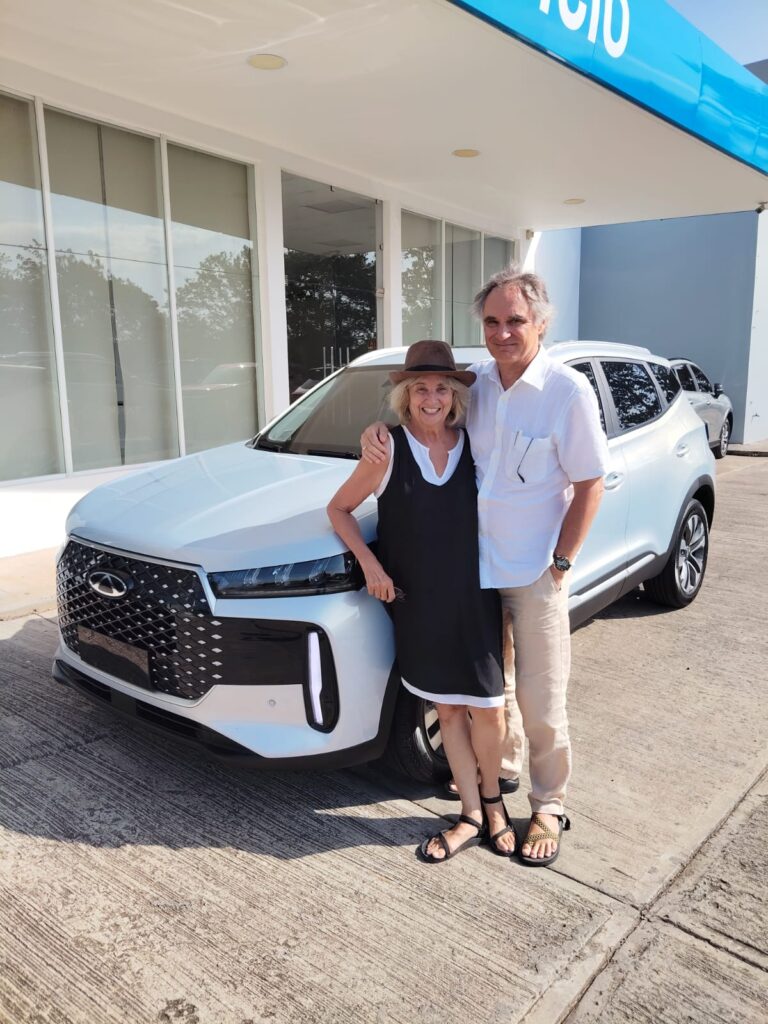
The first vehicle he showed us was a gunmetal gray Chery Tiggo 4 Pro. I loved the color. It had leather seats, a sunroof, an impressive sound system, and every feature we could have wanted.
He also showed us a larger hybrid, but we didn’t want a big vehicle. We wanted something easy to park and enjoyable to drive around town.
There was also a gorgeous mint-green electric car that completely stole my heart. Unfortunately, our community didn’t have charging stations, and charging infrastructure in Panama is still limited. It simply wasn’t practical.
Tom spent quite a while sitting in the Tiggo with David, learning all its features.
When I walked over, Tom leaned toward me and whispered, “I think we should buy this car.”
I turned to Ariel and Jenny.
“I know you wanted to take us to two more dealerships,” I said, “but we really like this one. Would it be crazy to just buy it?”
They smiled.
“No,” they said. “We’ve already researched the others. If this one feels right to you, it’s probably the best choice.”
David explained that the dealership was running a one-month promotion, bringing the price down to $24,000.
I smiled.
“We really like this car, but we had planned to visit two more dealerships. Would you call your manager and give us your very best price? If it’s right, we’ll buy it today.”
He made the call.
A few minutes later he returned.
“With an offer from his Manager we could not refuse.”
Tom and I looked at each other.
Then we reached out and shook his hand.
We had a deal.
Graham, it struck me that our first forty-eight hours in Panama had perfectly lived up to the title of this chapter. There had been blisters—the stress of moving, the lost paperwork, and the painful discovery that $3,000 had most likely vanished. But there had also been extraordinary moments of bliss: kind strangers, unexpected blessings, a new bank account, our first Panamanian phone numbers, and the purchase of the little car that would carry us into our new life.
Perhaps that’s how new beginnings always unfold—not as a string of perfect moments, but as an unexpected mixture of hardship and grace.
With love,
CC